
The robots of Servo Sprint
Servo Sprint has seven playable robots. Everyone starts with Unit 07, and the other six stand in the Garage showroom as dark silhouettes until you reach the grade they need and have the gears to buy them. Every robot is an original design, and each one changes how a run feels in a small, specific way. The numbers on this page come straight from the game's own tuning tables, so they are the real values, not marketing.
First, the fair-play rules
Three rules hold for every robot, and they matter more than any single perk.
- Same hitbox. Strider looks tall and thin and Hauler looks enormous, but every robot collides exactly like Unit 07. A bigger robot is never easier to hit.
- Small perks with a cost. Each robot gets one advantage and pays for it somewhere else, usually with a slightly lower jump or a softer lane change.
- The Daily Run is equal. In the Daily Run every robot runs on Unit 07's numbers with no perk, so the one shared course stays a test of the player.
For reference, Unit 07's baseline: a jump apex of about 1.4 m with roughly 1.07 seconds in the air, a lane change that settles in about 0.2 seconds, and a slide that lasts 0.72 seconds. The lanes sit about 1.9 m apart, and the line accelerates from around 40 km/h to a top speed of around 115 km/h.
At a glance
| Robot | Type | Unlock | Perk | Trade-off |
|---|---|---|---|---|
| Unit 07 | Humanoid | Free | Balanced | None |
| Strider | Reverse-knee walker | Grade 4 + 1,500 gears | Jump 8% higher | Lane change a touch slower |
| Pup-4 | Small quadruped | Grade 5 + 2,500 gears | Quicker hops, faster slide recovery | Less hang time to adjust in the air |
| Rover | One-wheel balancer | Grade 7 + 3,500 gears | Snappiest lane change, lowest slide | Jump 9% lower |
| Mag-Bot | Coil-backed biped | Grade 10 + 6,000 gears | Pulls in nearby gears | Jump 3% lower |
| Hauler | Cargo quadruped | Grade 12 + 8,000 gears | Ploughs through one small crate a run | Jump 3% lower, lanes a touch slower |
| Titan | Full humanoid frame | Grade 14 + 10,000 gears | Free Spare Servo every run | Jump 4% lower, lanes a touch slower |
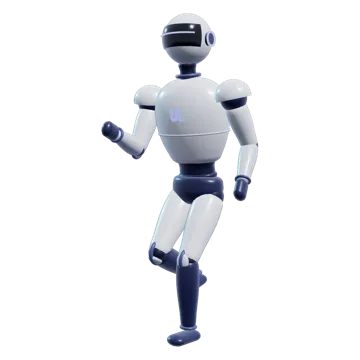
Unit 07
The starter, and the robot every other number is measured against. Unit 07 is a sleek humanoid that stands about 1.6 m tall, with no perk and no weakness. That makes it the honest choice for learning the line: what you see is what the physics do. Plenty of strong players keep coming back to it, because its timing is also the timing of the Daily Run. If you are practising for the Daily board, practise in Unit 07.
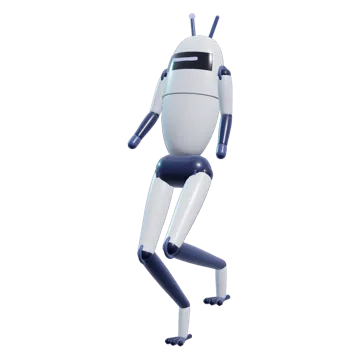
Strider
A tall, thin walker with long thighs angled forward and shins swept back, the bird-like digitigrade leg you see on some real bipedal robots. Strider's jump apex is 8% higher than Unit 07's, which gives you more margin over crates, rovers and gaps, and more time to see what is coming on the far side. The cost is a slightly softer lane spring, so side-steps settle a little later. Strider rewards players who read the line early and punishes last-instant swerves.
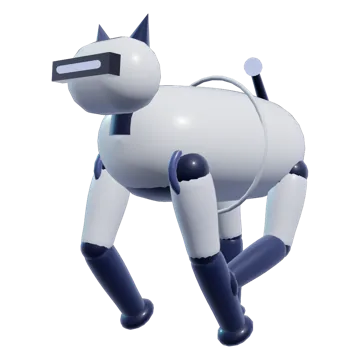
Pup-4
A small, low quadruped scout with a rounded shell, a sensor bar instead of a face, and a stubby antenna tail with a light on the tip. Pup-4 jumps to the same height as Unit 07 but falls about 10% harder, so each hop is roughly 5% shorter in the air. Its slide also ends 0.08 seconds sooner (0.64 s against 0.72 s). Together that means you are back on the ground and ready for the next input sooner, which is exactly what dense two-lane rows at top speed demand.
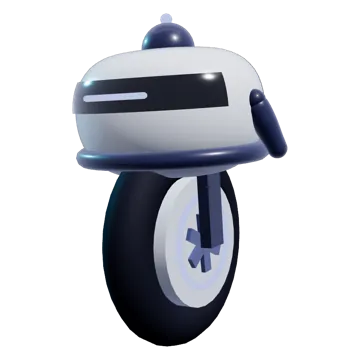
Rover
A squat body balanced on one big drive wheel, with a jointed tail that touches down on a small roller to steady it. Rover rolls instead of running and leans all the way back for the lowest slide in the game. Its lane spring is 14% stiffer than Unit 07's, so lane changes settle roughly 12% sooner: the snappiest side-step in the Garage. The catch is a jump 9% lower, which makes crates and gaps tighter. Rover suits players who would rather dodge than jump.
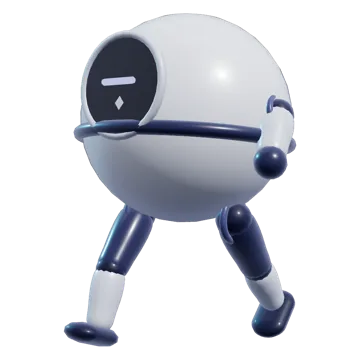
Mag-Bot
A round chassis on short legs with a wound magnetic coil on its back that glows while it runs. Mag-Bot pulls in gears up to 3 units ahead, in its own lane and the next one over. It only attracts gears, not screws, and its jump is 3% lower than Unit 07's. The pull is small but constant, which adds up over a long run: it is the robot for filling the Toolbox and finishing gear missions.
Hauler
A big flat-backed cargo quadruped with a crate rack, one strapped crate, a low sensor head and thick legs on padded feet. Once per run, Hauler can plough straight through one small crate without crashing and without using a Spare Servo. It scores nothing for it, and the contact still ends a golden wrench multiplier like any other hit. Hauler's jump is 3% lower and its lanes slightly slower. Think of the plough as insurance against one misread, not a weapon.
Titan
A full-size humanoid work frame: broad armoured chest, a narrow helmet with a T-slot visor, exposed linear actuators along the thighs and forearms, and a slow, planted stride. Titan starts every run (except the Daily Run) with its own free Spare Servo. It is used before any servos you bought, and it is still one revive per run, so the servos in your Toolbox stay put. Its jump is 4% lower and its lanes a touch slower. Titan is the long-run robot: one free mistake every single run is worth a lot of gears over a week.
The Foreman (not playable)
The Foreman runs Line 3. His drone hovers over your shoulder with a gold searchlight, closing in when you miss gears and backing off when you play clean. A few times a run he swoops ahead and lights the lane with the next hazard in it. He is never an obstacle and never changes your score, whichever robot you pick.
The roller form: UL-W1
Grab a wheel token and any robot folds into the UL-W1 roller for 8 seconds. It moves 20% faster, grinds rails, launches off ramps and builds drift combos from quick lane changes. It can't slide, only hop low, and robot arms stop spawning while you roll.
Workshop frames
In the Workshop, three of these robots become frames you can rebuild from parts: Rover (four wheels on sprung suspension in its Workshop form, fast and stable), Pup-4 (four legs with hips and knees, lots of joints to feed) and Unit 07 (two legs, a torso and passive arms, the hardest to keep upright). There, speed, climbing, runtime and stability come from the motors, gearboxes, batteries and link shapes you choose.
Which robot should you buy first?
Strider opens first and is the easiest upgrade to feel. If you mostly play on a phone, Pup-4's quick recovery tends to help more. Save for Mag-Bot if gears are the bottleneck, and for Titan if you want the longest runs. Whatever you pick, use the free daily test drive first: one run in a robot you don't own, with the score and gears counting as normal.
Play Servo Sprint · More: how to play · tips